Quick Guide for Understanding Towing Capacity in Arlington, WA
Are you new to the towing scene, or simply looking to learn more about what your Chevrolet vehicle is capable of? We at Dwayne Lane’s Arlington Chevrolet have put together this overview for you, so continue reading to learn about understanding your model’s towing capacity!
Start With Your Truck’s Curb Weight
Every towing calculation begins with curb weight, which is how much your vehicle weighs empty, with a full tank of fuel and no passengers or cargo. You can find this number on the driver’s side door jamb sticker or in your owner’s manual. A Chevrolet Silverado 1500, for example, carries a different curb weight depending on cab style, bed length and engine choice, so always check the sticker on your specific truck rather than relying on a general figure you saw online.
Understand Gross Vehicle Weight Rating
Gross Vehicle Weight Rating, or GVWR, is the maximum your truck can weigh once you add passengers, cargo, fluids and accessories. This number is fixed by the manufacturer and should never be exceeded. You’ll find it on the same door jamb sticker as curb weight. Subtracting curb weight from GVWR gives you your payload capacity, which matters for anything you carry inside the cab or bed, separate from what you’re pulling behind you.
Find Your Gross Combined Weight Rating
Gross Combined Weight Rating, or GCWR, represents the maximum allowable weight of your loaded truck plus a loaded trailer. This is where towing capacity actually comes from. Take your GCWR and subtract your truck’s actual weight, with driver, passengers, fuel, and cargo already loaded, and the remaining number is what you can safely tow. A Chevrolet Silverado 2500HD with the Duramax diesel engine and proper towing package will have a noticeably higher GCWR than a standard Silverado 1500, which is why matching the right truck to the right trailer matters from the start.
Weigh Your Trailer When Loaded
Never estimate trailer weight from the manufacturer’s dry weight listing alone. That figure doesn’t include propane tanks, batteries, water in the freshwater tank, gear, food or anything else you pack before a trip. The only accurate way to know your trailer’s real weight is to pull onto a certified scale once it’s loaded the way you’d actually travel with it. Many truck stops along I-5 and grain elevators offer public scales for a small fee, and it’s worth the stop before your first long haul.
Account for Tongue Weight
Tongue weight is the downward force your trailer places on the hitch, typically 10 to 15 percent of the trailer’s total loaded weight. Too little tongue weight can cause trailer sway, while too much can overload your rear axle. Check your hitch receiver’s rating separately from your truck’s towing capacity, since a mismatched hitch can limit what you’re able to pull even if your truck could otherwise handle more. Speak with our dealership team if you need assistance with this.
Match the Truck to the Job
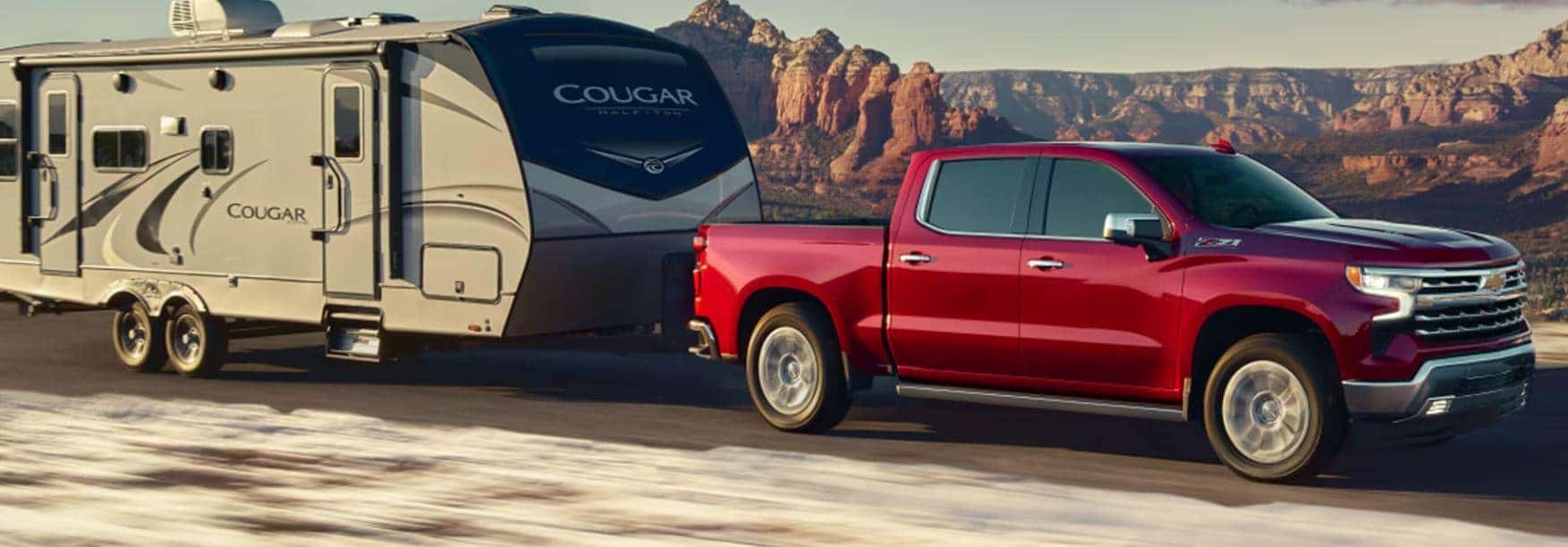
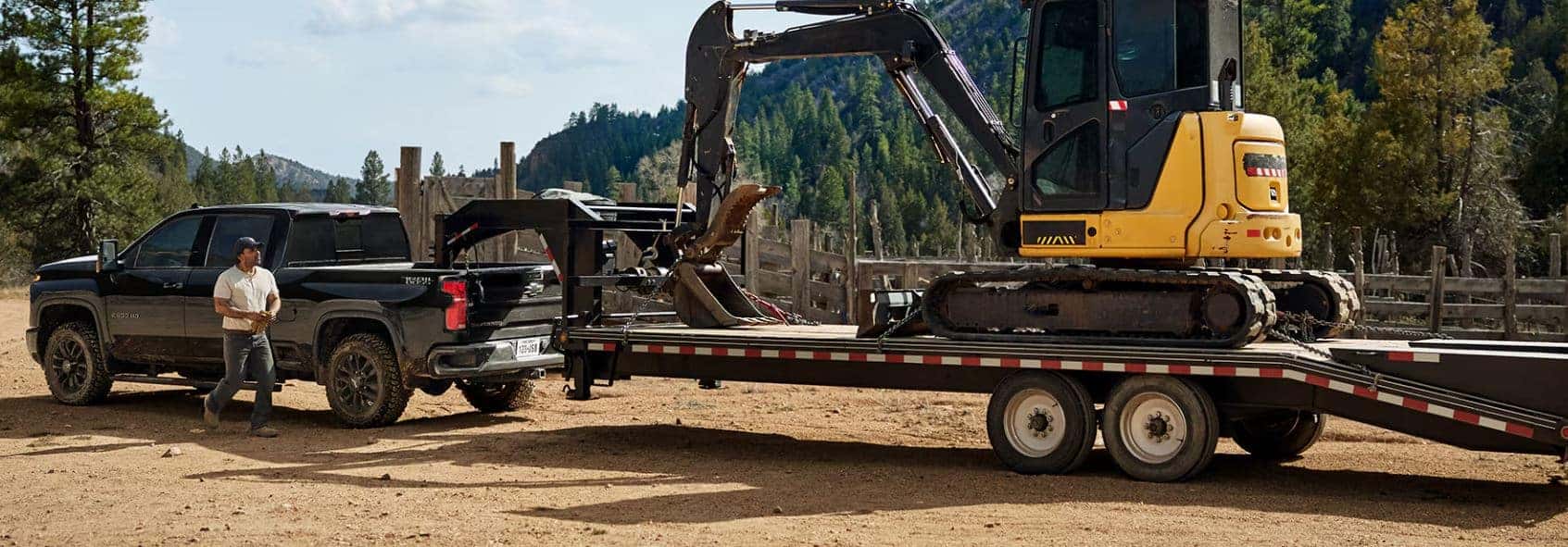
If you’re pulling a small camper or utility trailer around the Pacific Northwest, a Chevrolet Colorado with the available towing package may cover your needs. Families hauling boats, campers or car trailers on weekends often look toward a Silverado 1500 with the Max Trailering Package. For fifth wheel campers, large horse trailers or heavy equipment, a Silverado 2500HD or 3500HD provides the GCWR and axle strength required for the job. A Chevrolet Tahoe or Suburban can also handle moderate trailer loads for owners who want SUV seating along with solid towing numbers.
Talk to Your Dealership
Towing math can get complicated once you factor in axle ratios, cooling packages and optional equipment, and small differences in trim can shift the numbers. Our team can pull up the build sheet for your specific vehicle, confirm its GCWR and payload figures, and help you choose a trailer or camper that fits within those limits comfortably. Contact our dealership in Arlington if you have any further questions.